Water Extraction Services in Sunblest: Standing Water Removal
Standing water inside your Sunblest home is not a problem that waits. Every hour that water sits on flooring or wicks into drywall, the cost of restoration climbs and the risk of mold grows. Sunblest Water Restoration runs water extraction calls across Central Indiana with IICRC certified technicians, truck mounted extractors, and a straight answer approach to scope and price. Founded in 2018 and BBB A+ rated, we built this company on one rule: if we cannot help, we will tell you directly.
This page is a structured reference for homeowners and property managers in Sunblest dealing with an active water loss. You will find response benchmarks, equipment lists, IICRC category and class definitions, pricing ranges, and the exact questions to ask any extraction crew before they unroll a hose in your home. If you are reading this with water at your ankles, call us now and skim the rest after the trucks roll. If you are planning ahead or comparing companies after a quote, use the tables and checklists below to pressure test what you are being told. Either way, you should leave this page with a clear sense of what real water extraction looks like in Sunblest, what it costs, and how to avoid the two or three mistakes that turn a $2,000 job into a $20,000 rebuild.
Quick Answer: What Water Extraction Actually Means
Water extraction is the rapid mechanical removal of standing and trapped water from your structure using truck mounted vacuums, portable extractors, and weighted extraction tools. It is the first phase of water damage restoration, and it happens before drying, demolition, or rebuild. In Sunblest, a qualified crew should be on site within 2 hours of your call, with extraction starting within 15 minutes of arrival.
What It Is Not
- It is not shop vac cleanup. A residential vacuum cannot pull bound water from carpet pad or subfloor.
- It is not drying. Air movers and dehumidifiers come after extraction, not during.
- It is not demolition. Reputable crews extract first, measure moisture, then decide what must be removed.
- It is not a one visit job. Even a clean small loss usually requires 3 to 5 days of monitoring before the structure is verified dry.
Common Sunblest Causes We See Weekly
- Frozen and burst supply lines in unheated crawl spaces (January through February)
- Sump pump failure during spring storms
- Water heater tank ruptures (typically 8 to 12 year old units)
- Dishwasher and ice maker supply line splits
- Roof leaks after wind or hail events
- Sewer line backups during heavy rain
- HVAC condensate overflow from clogged drain pans in summer
- Refrigerator water line failures behind cabinetry, often discovered weeks after the slow leak begins
If you are standing in water right now, stop reading and call Sunblest Water Restoration. Document everything with photos and video before anything is moved, then shut off power to the affected area at the breaker if it is safe to reach. The faster extraction begins, the more of your Sunblest home or business stays in place rather than ending up in a dumpster.
Questions to Ask Before You Sign Anything
- Are your technicians IICRC certified in Water Damage Restoration (WRT)?
- What category and class is my loss, and how did you determine that?
- Will you provide daily moisture logs for my insurance carrier?
- What is your dry standard, and how will you prove you hit it?
- Is the price an estimate or a Xactimate based scope?
- Do you bill my insurance directly, or do I pay and submit?
- Who is my point of contact if the scope changes mid job?
Why Extraction Speed Matters More Than Drying Power
The single biggest factor in whether your floors, cabinets, and drywall can be saved is how much water is mechanically removed in the first few hours. Extraction pulls water roughly 1,200 times faster than evaporation. Every gallon a crew vacuums out is a gallon the dehumidifiers do not have to pull from the air later, which shortens the drying timeline and reduces equipment rental costs that often appear on insurance estimates.
Materials and Their Salvage Window
- Carpet face fiber. Almost always salvageable in Cat 1 if extracted within 24 hours.
- Carpet pad. Rarely salvageable. Cheaper to replace than to dry.
- Engineered hardwood. 12 to 24 hour window before cupping becomes permanent.
- Solid hardwood. Can sometimes be dried in place with mat systems if caught in 48 hours.
- Drywall. Bottom 12 to 24 inches is typically flood cut in Cat 2 and Cat 3 losses.
- Insulation. Fiberglass batt loses R-value when wet. Remove and replace.
Equipment a Real Extraction Crew Brings
If a company shows up with a single portable extractor and a few fans, you are looking at a crew that will undercharge today and undertreat your structure. Ask what they are bringing before they arrive.
- truck mounted extraction unit (200+ PSI, heated)
- Portable extractors for stairs and tight spaces
- Weighted extraction tools (Rover or similar) for carpet pad
- Submersible pumps for water over two inches deep
- Penetrating and non penetrating moisture meters
- Thermal imaging camera to map hidden moisture
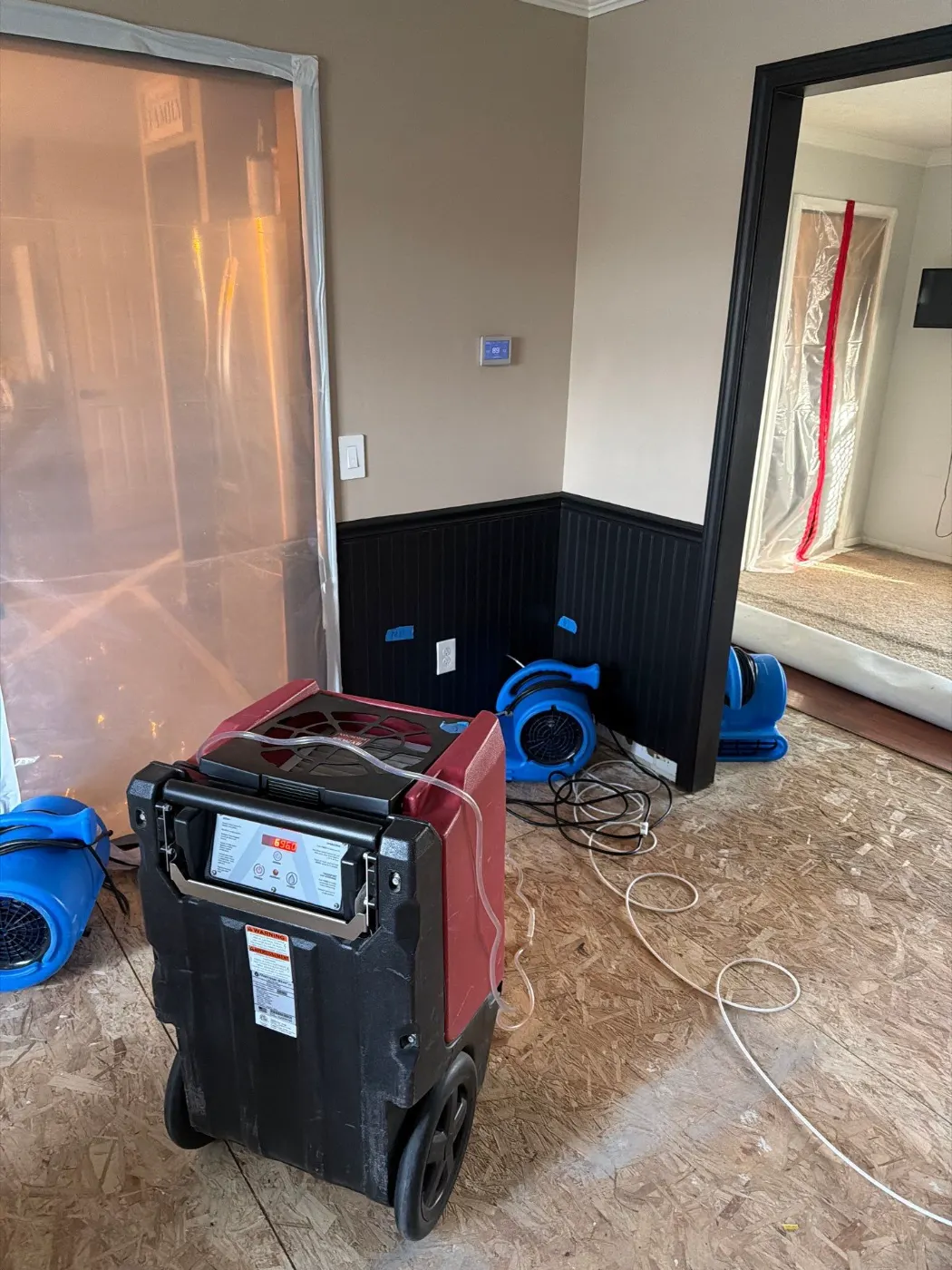
- Commercial air movers and LGR dehumidifiers for the drying phase
- HEPA air scrubbers when Category 2 or 3 water is present
- Containment poly and zipper doors to isolate affected areas from clean zones
IICRC Water Categories and What They Mean for Your Sunblest Property
The IICRC S500 standard sorts water losses into three categories. The category drives the scope of work, the PPE required, and what your insurance will approve. Category can also change over time. A Cat 1 loss left untreated for 48 to 72 hours often degrades to Cat 2 as bacteria multiply in the standing water.
| Category | Source | Typical Sunblest Example | Extraction Approach |
|---|---|---|---|
| Cat 1 (Clean) | Sanitary water | Supply line break under kitchen sink | Extract, dry in place when possible |
| Cat 2 (Gray) | Significantly contaminated | Washing machine overflow, sump pump failure | Extract, remove porous materials, sanitize |
| Cat 3 (Black) | Grossly contaminated | Sewage backup, river flooding | Full PPE, remove affected porous materials, antimicrobial treatment |
If your loss involves sewage or a toilet overflow past the trap, treat it as Category 3 and review our sewage cleanup protocols before letting anyone start extraction without proper PPE.
What Happens Step by Step
- Source control. The water stops. If it has not, we shut off the supply or coordinate with a plumber.
- Safety check. Electrical, slip, and contamination hazards are addressed before crews enter.
- Category and class assessment. IICRC standards drive the scope.
- Content protection. Furniture is blocked or moved. Salvageable contents are inventoried.
- Bulk extraction. Standing water is removed first, then bound water from carpet, pad, and subfloor.
- Moisture mapping. Meters and thermal imaging document what is wet and how wet.
- Drying setup. Air movers and dehumidifiers are placed based on cubic footage and material type.
- Daily monitoring. Readings are logged for the insurance file until structures hit dry standard.
When Standing Water Hits Your Sunblest Home, Call Before It Spreads
Every story above started the same way: a phone call from someone who was not sure what to do next. The homeowners who fared best were the ones who picked up the phone fast, shut off the water source if they could, and let trained extraction crews handle the rest. Sunblest Water Restoration runs IICRC certified crews across Sunblest around the clock, holds a BBB A+ rating, and has been doing this work since 2018. If you are standing in water right now, call us. If you are not sure whether you need us, call anyway. We will tell you the truth either way.
Response Timeline and Pricing in Sunblest
| Service Element | Typical Range | Notes |
|---|---|---|
| Emergency response | within 2 hours | Sunblest Water Restoration dispatches 24 7 across Central Indiana |
| Extraction only (small) | $400 to $1,200 | One to two rooms, Cat 1 water |
| Extraction plus drying | $2,000 to $6,000 | Average residential loss |
| Cat 3 extraction | $3,500 to $10,000+ | Includes containment and disposal |
| Basement flood, finished | $5,000 to $20,000+ | See flooded basement cleanup pricing |
Frequently Asked Questions
How fast can Sunblest Water Restoration get to my Sunblest property for water extraction?
Our standard target across Central Indiana is 60 to 90 minutes from your call. Overnight and holiday response runs the same. We dispatch from local trucks, not a national call center, so a real Sunblest Water Restoration technician is on the phone with you within minutes.
Will my homeowners insurance cover standing water removal in Sunblest?
Sudden and accidental water losses are typically covered. Gradual leaks, flood from rising surface water, and unmaintained issues are usually excluded. We document Cat and Class per IICRC standards and bill your carrier directly so the claim moves without you chasing paperwork.
Can I just rent a pump and handle this myself?
For under 50 square feet of clean water under 24 hours old, sometimes yes. Anything larger, anything contaminated, or anything touching drywall, hardwood, or HVAC needs professional drying and moisture verification. Otherwise you are setting up a mold call in three weeks.
How long does the full extraction and drying process take?
Extraction itself usually finishes in 2 to 6 hours. Structural drying runs 3 to 5 days with equipment in place and daily moisture checks. We do not pull equipment until readings hit dry standard, which protects you from hidden mold later.
What if mold has already started growing under the water?
We document it, contain the area with negative air, and either remediate in-house or coordinate with a licensed remediator depending on scope. If the situation needs a specialist we do not staff, we tell you directly rather than stretching beyond our certification.
Have a restoration question?
Our IICRC certified Sunblest crew is ready to help. Free assessments, estimate based on what we can sees, no pressure.